Fast 3D printing service for prototypes and production parts. As a leading 3D printing company, we use advanced additive manufacturing technologies, producing high-quality 3d printing parts at competitive prices.
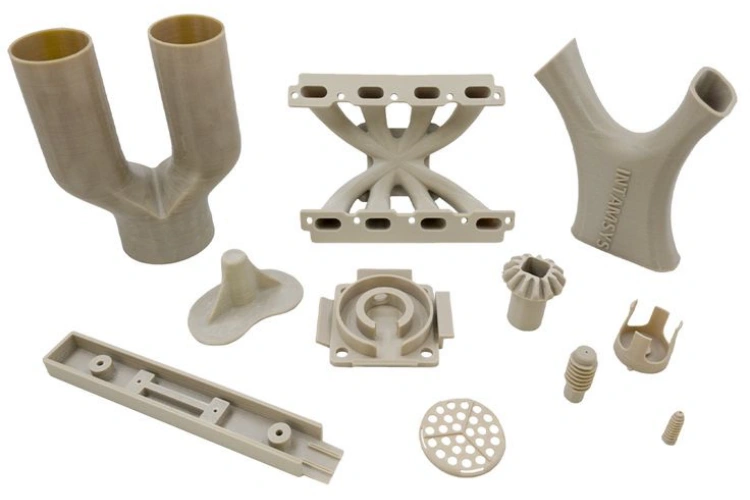
MJF
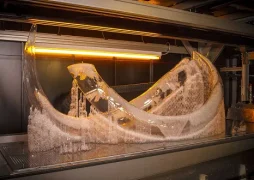
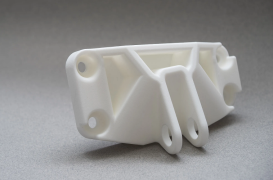
For custom 3D printing using Multi Jet Fusion (MJF), an array of inkjet printheads is employed to selectively apply a fusing agent to a bed of powder material, which is then fused layer by layer through heating. It’s fast, cost-effective, and can create parts with exceptional details with also minimizing the 3D printing service cost.
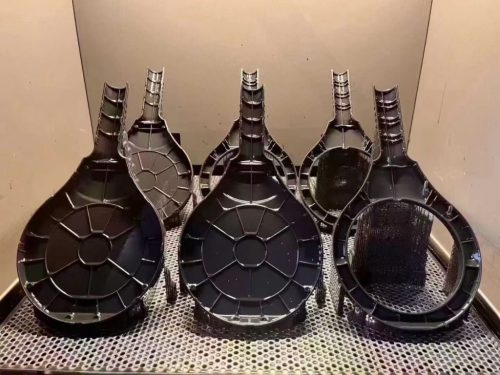
SLS
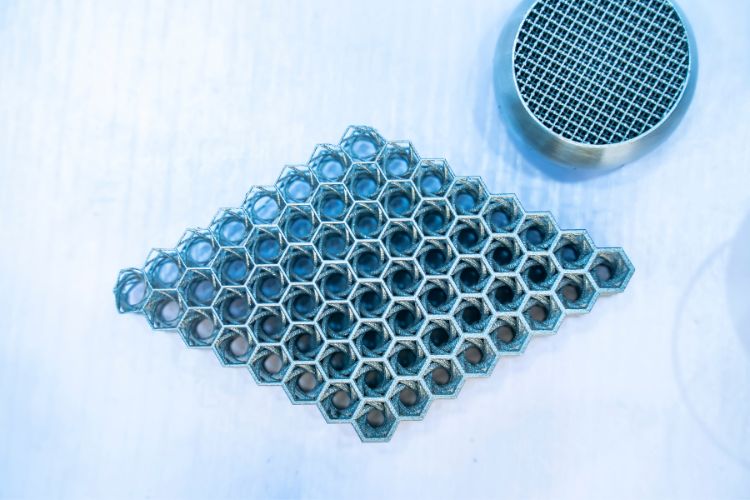
Selective Laser Sintering (SLS) for 3D printing involves using a powerful laser to fuse small particles of powder material, layer by layer, to create custom 3D printed parts. Print parts with minimal support structures, resulting in less waste material and a smoother surface finish. It’s ideal for creating functional prototypes and producing small product quantities.
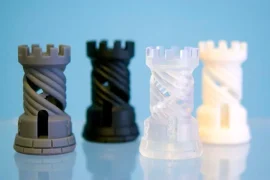
SLA
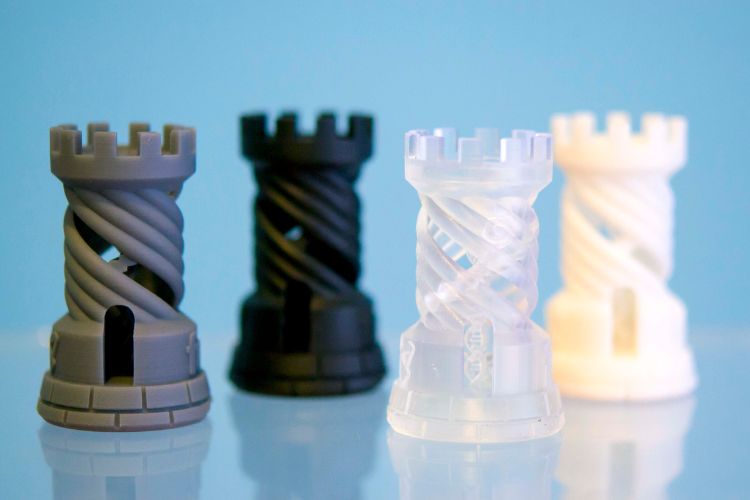
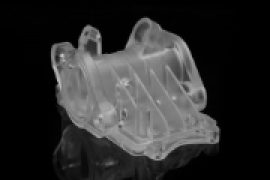
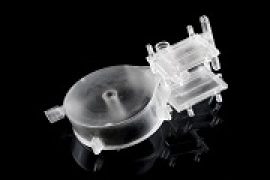
SLA is a high-precision 3D printing technology that uses a laser beam to cure liquid photopolymer resin layer by layer, making it ideal for printing models with complex details and high accuracy. Compared to other printing technologies, SLA can achieve extremely fine surface quality and precise details, typically reaching resolutions of 25 microns or smaller.
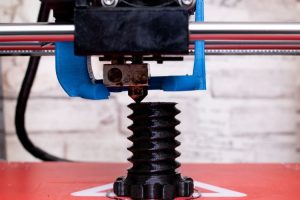
FDM
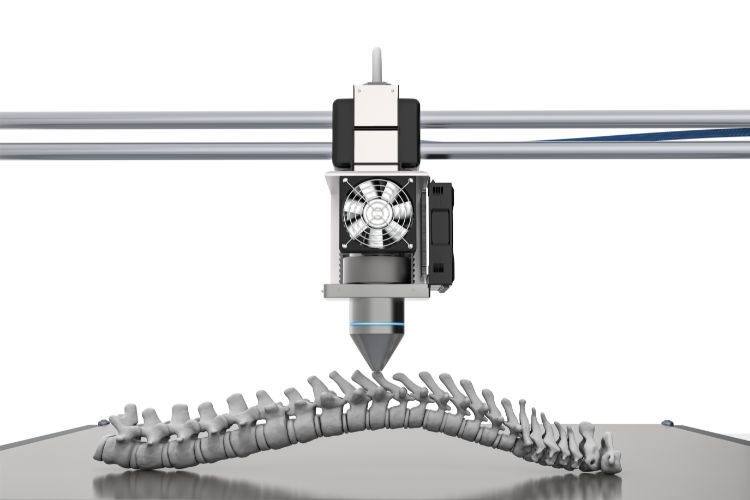
Fused Deposition Modeling (FDM) involves extruding thermoplastic materials layer-by-layer to print 3D models. It makes printing the highest quality 3D designs possible by ensuring exceptional strength, durability, and heat resistance. Excellent for fast prototypes and affordable 3D printing service cost.
FDM, SLA, SLS, and DLP for a wide range of applications.
Extensive Experience and Expertise
Over 20 years of experience in the 3D printing industry. Served 500+ clients from various industries and produced [over 1 million] parts.
Wide Range of Material Options
Offers 150+ materials, including plastics, metals, resins, and more, to meet diverse application needs.
Fast Delivery
Prototypes in 48 hours and functional parts in 3-7 days.
NO MOQ
Supports on-demand production, offering flexible solutions to meet the needs of different projects.
Competitive Pricing
Transparent quotes with no hidden fees.
Timely's Showcase: A Stunning Gallery of Custom 3D Printed Parts
As a renowned 3d print company, Timely has 20+ years of experience in on demand 3d printing. Browse through our gallery from intricate prototypes to functional components, to see how we turn your ideas into reality with cutting-edge 3D printing technology.
Parts Manufacturing on Demand with Timely's 3D Printing Factory
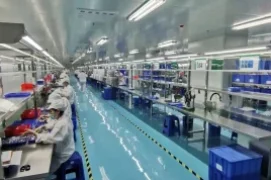
We operate from a specialized plant area of 6,500 m² equipped with 60 industrial-grade 3D printers, offering 3D printed parts from over 30 trusted brands.
We offer expedited services for urgent orders, with turnaround times as fast as 24-48 hours.
Our 3D printers can achieve resolutions as fine as 25 microns with the ability to print highly-detailed and complex parts.
3D Printing General Tolerances & Design Guidelines
To ensure your designs are optimized for manufacturing, we have outlined general tolerances and design guidelines below. These recommendations will help you achieve the best possible results for your 3D printed parts.
Our 3D printing processes adhere to the following general tolerances unless otherwise specified. These tolerances apply to parts before secondary finishing or post-processing.
Description
Tolerance Notes
Part Size
We can accommodate parts up to 500mm x 500mm x 500mm without splitting or bonding.
Minimum Feature Size
Typical range: 0.5mm – 1.5mm (depending on material and technology).
Minimum Wall Thickness
Typical range: 0.5mm – 1.0mm (may vary based on material and part geometry).
Clearance Between Features
Recommended minimum: 0.5mm for moving parts or assemblies.
For tighter tolerances or specific requirements, please contact our team for customized solutions.
Applications of 3D Printing
Concept Models
Concept models are part of the early design stage and are used to showcase and validate initial design ideas. Through 3D printing, designers can quickly create a physical model to better understand the design’s shape, size, and functionality.
Application Examples: Appearance models in the early stages of product design, architectural models, etc.
Rapid Prototyping
Rapid prototyping is an important application of 3D printing. By quickly creating prototypes, designers can identify potential issues before actual production and make necessary adjustments and improvements.
Application Examples: Automotive parts prototypes, electronic device casing prototypes, etc.
Production Parts
3D printing technology can directly produce final products from digital models, eliminating the need for traditional molds or tooling. This process is suitable for small-batch and customized production.
Application Examples: Custom prosthetics, aerospace components, personalized consumer products, etc.
How Do We Achieve Repeatable Precision with Every Print?
We employ state-of-the-art equipment and standardized processes to produce high-precision, repeatable 3D printed components.
Standardized Process Control
Automatic slicing parameter calibration
CMM 3D scanning inspection (±0.01mm tolerance)
Laser morphology analysis (25-micron precision)
Intelligent Equipment Cluster
60 high-performance 3D printers (covering SLA, DLP, FFF technologies)
Equipped with an IoT real-time monitoring system
Minimum print resolution of 25 microns
Expert-Level Quality Assurance
Engineering team with over 10 years of experience
CSWA/CSSP certified quality inspection team
Expert-Level Quality Assurance
Engineering team with over 10 years of experience
CSWA/CSSP certified quality inspection team
Our 3D Printing Materials
We can generate instant 3D printing quotes for 50+ metals and plastics materials. Whether you’re prototyping complex designs or producing end-use parts, our multiple materials are provided to meet the demands of various industries and a wide range of applications.
Nylon
Polyamide (nylon) is a versatile thermoplastic with high tensile strength and excellent flexibility. It has a relatively high melting temperature and can be reinforced with fillers like carbon fiber or glass to improve the mechanical properties of your 3D printed parts.
ABS
It’s a popular 3D printing material known for its excellent mechanical and thermal properties. Its high melting temperatures, toughness, impact & heat resistance make it a perfect choice for custom 3D printing.
PLA
It’s an eco-friendly thermoplastic polymer and is biodegradable. It has a relatively low melting temperature and can be reinforced with additives (carbon fiber or metal powder) to enhance its mechanical properties.
PC (Polycarbonate)
Polycarbonate (PC) is a thermoplastic with high toughness, excellent impact strength and good machinability. Can be optically transparent.
Aluminum Alloys
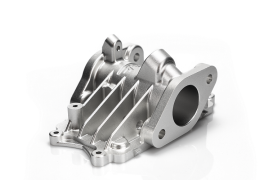
Aluminum alloys are characterized by light weight, moderate strength, and good thermal conductivity. They are suitable for fields such as aviation, automotive, and consumer electronics.
Titanium Alloys
Titanium alloys have high strength, low weight, and excellent corrosion resistance. They are widely used in aerospace, medical implants (such as bone and dental implants), and high-performance industrial components.
Stainless Steel
Stainless steel is one of the most widely used metal 3D printing materials. It offers excellent mechanical properties and corrosion resistance, making it suitable for medical devices, tools, and automotive parts.
Cobalt-Chromium Alloys
Cobalt-chromium alloys offer high wear and heat resistance. They are commonly used in dental and medical implants as well as turbine components.
Copper
Copper displays excellent thermal conductivity, electrical conductivity and plasticity. It is also highly ductile, corrosion resistant and can be easily welded.
Nickel Alloys
Nickel-based alloys exhibit excellent high-temperature resistance and corrosion resistance. They are widely used in aerospace, chemical, and oil and gas industries, particularly for manufacturing turbine blades and engine parts.
We can source any other material on request, but quotes take up to 48 hours.
Post-Processing Services for 3D Printed Parts
Timely provides a range of high-quality secondary processing options designed to improve the surface quality, structural integrity, and visual appearance of final parts.
Surface Treatment
Deburring and Polishing: After 3D printing, we remove any excess material, support structures, and burrs to ensure smooth surfaces and defect-free parts. This results in parts that meet high-quality aesthetic standards.
Surface Polishing: For certain plastic and metal parts, we employ advanced polishing techniques to achieve a smooth, mirror-like finish that enhances both the visual appeal and tactile feel.
Spray Coating and Painting
Spray Painting and Coloring: To improve the appearance of parts, especially those with high aesthetic requirements, we offer a range of colors and finishes, including spray painting and UV coating. These coatings not only enhance the visual quality but also improve surface scratch resistance and weatherability.
Metal Coating: For 3d printed metal parts, we provide metal spray coating services to increase corrosion resistance and improve surface aesthetics, making the part appear similar to cast or precision-machined metal.
Assembly and Insertions
Component Assembly: Complex metal and plastic parts may require assembly with other components. Timely offers full assembly services, whether for mechanical or electronic components, providing a complete solution for your needs.
Insertions of Embedded Components: For parts that need to integrate with other materials, we can insert metal inserts, thread processing, and other functionalities during or after the printing process to ensure the parts meet your strength and functional requirements.
Heat Treatment and Hardening
To enhance the strength, hardness, and fatigue resistance of 3d metal printed parts, Timely provides appropriate heat treatment processes such as annealing and hardening. These treatments optimize the material properties of metal parts for specific applications.
Industry Application of 3D Printing Processes
3D printing processes offer innovative, cost-effective solutions for both prototyping and production parts across a wide range of industries. With over 20 years of experience in the 3D printing industry, Timely has successfully delivered millions of custom parts and prototypes to clients across sectors such as aerospace, automotive, medical, and more.
Complex Part Manufacturing: Traditional aerospace parts often require complex tooling and multiple production stages. 3D printing can directly create intricate geometries, reducing production time and costs.
Lightweight Design: Aerospace companies use 3D printing to produce lightweight structural components, reducing aircraft weight, which in turn improves fuel efficiency and overall performance.
Personalized Medical Devices: 3D printing enables the production of customized medical devices, such as prosthetics, implants, and dental restorations, tailored to individual patient needs.
Human Models: 3D printing allows doctors to create detailed patient-specific organ or tissue models for precise surgical planning and simulation.
Prototyping: 3D printing is widely used for rapid prototyping, allowing automotive designers and engineers to quickly validate and iterate design ideas.
Small Batch Custom Parts: 3D printing is ideal for producing small quantities of customized parts, such as personalized interior components and exterior accessories.
Rapid Prototyping and Product Design: 3D printing accelerates the design cycle in consumer electronics, enabling designers to quickly prototype products for functional testing and user feedback.
Small Batch Production: 3D printing can be used to produce limited-run electronic parts, such as custom housing or connectors, reducing excess inventory and production costs.
Trusted by Industry Leader Companies
500+ global companies depend on Timely for precision injection molding and custom mold design.
FAQ's
What is 3D Printing?
3D Printing, also known as Additive Manufacturing, is a technology that creates three-dimensional objects by layering materials. Unlike traditional subtractive manufacturing methods (such as milling or cutting), it builds objects layer by layer based on digital model files using various materials (e.g., plastics, metals, ceramics, etc.).
3D printing primarily uses the following technologies for prototyping and final part production:
FDM (Fused Deposition Modeling): Melts thermoplastic filaments and layers them to form objects, commonly used for low-cost prototyping and personal printing.
SLA (Stereolithography): Uses a laser to cure liquid resin through photopolymerization, layer by layer, suitable for high-precision printing.
SLS (Selective Laser Sintering): Uses a laser to sinter powdered materials (e.g., plastics, metals) layer by layer, ideal for producing functional parts.
DLP (Digital Light Processing): Similar to SLA but uses digital light projection for curing, offering faster printing speeds.
By using our 3D printing services, you can benefit from the following:
Design Freedom: Enables the creation of complex geometries that are difficult to achieve with traditional methods.
Rapid Prototyping: Shortens product development cycles and allows for quick design validation.
Customization: Supports personalized and small-batch production.
Waste Reduction: Uses only the necessary materials, minimizing waste.
Cost Reduction: Especially in small-batch production, reduces the need for molds and tooling costs.
How much does your 3D printing service cost?
The cost of 3D printing services can vary depending on several factors, including:
Material Type: Different materials (plastics, metals, resins, etc.) have varying costs, with specialty materials typically being more expensive.
Complexity of Design: More intricate or detailed designs usually require more time and effort to print, which can increase the price.
Part Size: Larger parts require more material and time to print, so they generally cost more.
Quantity: Ordering multiple parts may reduce the unit price due to economies of scale.
Post-Processing: Some prints may require additional finishing steps like sanding, painting, or assembly, which can add to the cost.
Turnaround Time: Faster delivery or expedited services may incur additional charges.
At Timely, we provide highly competitive pricing for you and a range of valuable and informative features such as design support to optimize your 3D models for better printability, and material selection advice to help you choose the best material based on your project’s needs and performance requirements. We offer customizable quotes based on your specific needs and ensure you get the best possible value for your investment. We are transparent about our 3D printing service cost and pricing, with no hidden fees or charges, so you know exactly what you are paying for. Get an instant quote!
For more detailed information about 3D printing costs, you can check out our comprehensive guide.
What are the tolerances of your 3D printing technologies?
At Timely, we understand that achieving the best results for custom 3D printing parts requires selecting the right technology based on specific project requirements. Our FDM technology (fused deposition modeling) – based 3D printers typically offer tolerances in the range of +/-0.2mm, which is great for medium-large sized parts. On the other hand, we can achieve +/-0.05mm with SLA technology for high-precision prints with intricate details and smooth surfaces.
Our 3D printers, which feature SLS (selective laser sintering) technology, are ideal for producing parts with complex geometries and high strength with a tolerance range of +/-0.1mm. While our MJF-based 3D printers are known for producing strong, high-quality parts with a tolerance range of +/-0.2mm. Our team of experts works closely with clients to determine the appropriate technology based on the desired level of precision, surface finish, and strength.
How do you guarantee the quality of my prints?
Timely understands the importance of ensuring the quality of your prints, as every high-tech 3D print company should. We have implemented various methods and processes to guarantee the quality of your 3D printed parts, including:
Audits: We regularly audit our 3D printing processes and equipment to ensure they function optimally and produce consistent, high-quality results.
Inspection reports: We provide inspection reports for each 3D printed part, detailing the dimensions, tolerances, and other relevant information to ensure your parts meet the correct specifications.
Individual inspections: Our team inspects each part to ensure it meets the required quality standards, including checking for defects or imperfections.
Quality control processes: We have implemented rigorous quality control processes throughout our production facility to ensure that each part we manufacture is of the highest standards.
Material testing: We conduct material testing to ensure your parts are made of the highest grade of materials.
Experienced staff: our team of experienced 3D printing experts has the knowledge and expertise to identify and address any issues that may arise during production.
How do I select the right 3D printing process for my prints?
There are several factors you should consider when it comes to selecting the proper 3D printing process. Here are some ways to identify what 3D printing technology suits you the best:
The complexity and geometry of your parts significantly impact this choice, and parts with intricate details and delicate features may require high-precision processes such as SLA or SLS.
Different 3D printing processes are compatible with different materials, so the choice of the process will depend on the specific material requirements of the part.
The production volume of the part impacts the choice of the 3D printing process, and processes such as SLA or FDM are more suitable for low-volume production.
Processes like FDM requires additional post-processing to achieve a smooth surface finish; on the other hand, processes like SLA provides a smooth finish and doesn’t require any further surface finishing.
3D printing service and process costs are also important; some processes may be more expensive.
The time required for a 3D printing process to print a part can gradually increase or decrease the overall cost, and some processes may have longer lead times than others.
By working with a well-experienced 3D print company like Timely, you can receive expert guidance on selecting the best process for your 3d printing project.
How can I reduce the cost of my 3D prints?
There are several ways to reduce the cost of your 3D prints without sacrificing the quality of your parts. Lowering the 3D printing cost is a concern for many, and choosing the suitable material, printing technology, and surface finishes can reduce the cost of your parts. Furthermore, the volume of each part can significantly impact the cost, and reducing the size of the part or hollowing it out can dramatically reduce material use and lower the overall cost.
Remember that different printing technologies have different costs associated with them, and selecting the right 3D print company can also reduce the 3D printing service cost by a great margin. High-volume productions can save money on material and setup costs. Most importantly, working with an experienced 3D printing manufacturer like Timely can make it possible to find ways to reduce the cost of your parts without compromising quality or performance.