
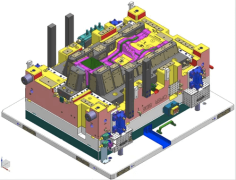
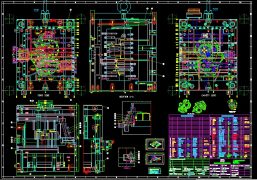

Custom Mold Design Services

Are you seeking injection molding mold design services for custom plastic products? With our fast quotation service, get free mold manufacturing or injection molding quotes, and design feedback from our experts.

Design Engineers
0 +
Experience (Years)
0
DFM (days)
0
Mold design (days)
0 +

Our Custom Injection Molding Design Capabilities

With Timely’s 20+ years of injection mold design expertise, your ideas become manufacturable, scalable, and competitive.

✅ 20+ Years of Experience: Specializing in complex mold projects.

✅ Proprietary Technology: Advanced CAM software and automation for defect-free molding.

✅ Serving 500+ projects with complex molding challenges.

DFM

DFM Report

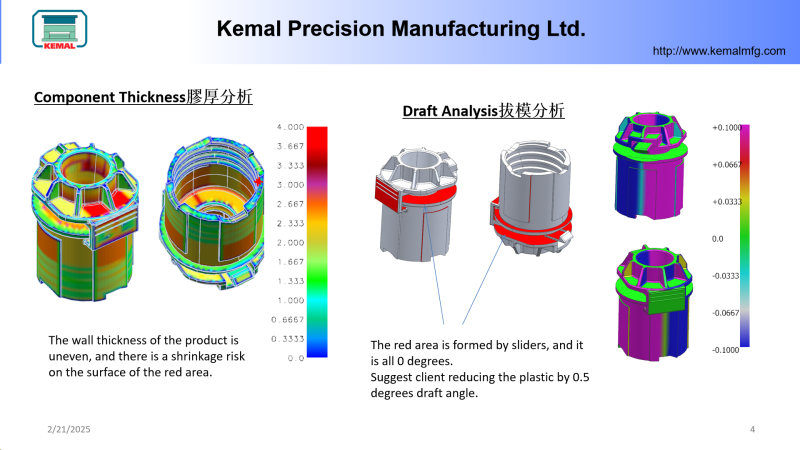
Our DFM analysis service ensures manufacturability by addressing critical issues early in the design phase. Depending on various types of manufacturing processes there are set guidelines for DFM practices that help to precisely define various tolerances, rules, and common manufacturing checks.

11241696918543_.pic_

Moldflow Analysis

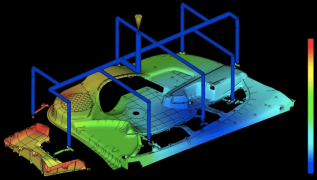
MoldFlow provides simulation tools for injection mold design. By iterating molding simulations, our team can optimize product designs, mold designs, and prevent multiple modifications to the mold, reducing costs and time.

11271696918655_.pic_

2D & 3D Mold design

With 2D & 3D design, we can help our clients figure out changes or improvements needed for the product. We can check all the details in the mold and avoid the possibility of mistakes.

Mold-design-Approval-Plastic-Injection-molds

Complex Geometric Design

Specializing in advanced mold solutions for intricate structures like thin-walls, curved surfaces, undercuts, and threads. 

  • SolidWorks/UG NX for ultra-accurate designs.
  • Multi-slide/side-core technology to conquer challenging geometries.

Custom Mold Design Services: From Concept to Production

Our mold design services are dedicated to providing efficient and precise design solutions for a wide range of manufacturing industries. With extensive industry experience and advanced design software support, our design team is capable of delivering one-stop customized services from concept to finished product based on your specific needs. By optimizing product manufacturing processes and structures, our injection molding design solutions not only help you reduce costs but also enhance production efficiency and product quality.

Why Choose Timely for On-demand Manufacturing Services

Extensive Design Experience

With over 25 years of expertise in mold design, Timely serves diverse industries such as aerospace, automotive, medical, and consumer goods. Our deep understanding of each industry’s requirements ensures tailor-made design solutions for your custom mold.

Professional Design Team

Our team comprises skilled engineers and designers proficient in using advanced CAD/CAM software and technologies. They create precise mold designs that ensure every detail, from concept to production, meets the highest standards.

High-Precision Design Tools

We leverage industry-leading tools such as Pro/E, UG, and SolidWorks to deliver accurate plastic mold design. These technologies enable us to achieve high precision and superior performance right from the design stage.

Focus on Manufacturability

Our designs prioritize both mold performance and manufacturability. By optimizing mold structures, we help reduce production costs and enhance product quality for you.

Customized Design Services

Whether it’s complex multi-cavity molds, precision molds, or industry-specific molds, Timely provides custom mold & design services to meet the unique needs of various customers.

Customer Support

We maintain close communication with customers throughout the tooling design phase, ensuring the final design aligns perfectly with expectations. Additionally, we offer technical consultations and after-sales support to guarantee long-term mold reliability.

Our Mold Design Process

Requirement Analysis

We begin by thoroughly analyzing your product requirements, application goals, and production objectives. Collaborating closely with you, we gather detailed information, including product specifications, material requirements, functional needs, and potential challenges.

Feasibility Analysis

Our expert team conducts a comprehensive feasibility study to evaluate the manufacturability and cost-effectiveness of the design. This step helps identify potential challenges and optimize the injection molding design before moving forward.

Concept Design

Using advanced CAD software, our design team creates an initial concept tailored to your specifications. This includes the mold layout, cavity arrangements, and core design, ensuring the mold meets all functional and structural requirements.

3D Design and Simulation

We develop detailed 3D models of the mold using tools like SolidWorks, UG, or Pro/E. These models undergo rigorous simulation tests, including flow analysis and stress testing, to validate performance and optimize production outcomes.

Design Review and Client Approval

Once completed, the design is reviewed internally to ensure accuracy and quality. The finalized design is then presented to you for feedback and approval. We promptly implement any revisions needed to meet your expectations.

Detailed Engineering Drawings

After approval, we create comprehensive engineering drawings that detail all mold specifications, including dimensions, tolerances, and material requirements. These serve as the blueprint for the manufacturing stage. Mold makers will follow these drawings to build the mold with precision.

Prototyping (Optional)

If required, we offer prototyping services to test the mold design before full-scale production. This step allows additional validation and refinement, minimizing risks in mass production.

Post-Design Support

Our commitment doesn’t end with delivery. We provide ongoing technical support to ensure optimal mold performance in production. From adjustments and maintenance advice to troubleshooting, our team is always ready to assist.
Injection Molding Design Guidelines for Custom Part

Injection molding is a highly efficient manufacturing process for producing high-volume, precision parts. To ensure your custom parts are optimized for injection molding, follow these design guidelines. These recommendations will help you avoid common issues, reduce costs, and improve the quality of your parts.

Design Aspect

Guidelines

1. Wall Thickness

Uniform Wall Thickness: Maintain consistent wall thickness to prevent warping, sink marks, and uneven cooling.

Recommended Thickness: 1.5mm – 4mm for most thermoplastics. Thin walls (< 1mm) possible with careful design and material selection.

2. Draft Angles

Purpose: Facilitate easy ejection of parts from the mold.

Recommended Draft: 1° – 2° for most parts. For textured surfaces, increase to 3° – 5°.

3. Ribs and Bosses

Ribs: Use ribs to strengthen parts without increasing wall thickness. Rib thickness should be 50% – 60% of the adjacent wall thickness.

Bosses: Design bosses with a draft angle and support with ribs to prevent sink marks.

4. Corners and Fillets

Sharp Corners: Avoid sharp corners to prevent stress concentrations and part weakening.

Fillets: Use fillets with a radius of 25% – 50% of the wall thickness for stress distribution and improved flow.

5. Undercuts

Avoid Undercuts: Undercuts complicate mold design and increase costs.

Design for Ejection: Ensure parts can be ejected without damage.

6. Gate and Ejector Pin Locations

Gate Placement: Position gates in non-critical areas to minimize visible marks. Consider material flow to avoid weld lines.

Ejector Pins: Place ejector pins in areas that do not affect the part’s appearance or function.

7. Tolerances

Standard Tolerances: ±0.1mm – ±0.3mm for most features. Tighter tolerances may increase costs.

Critical Dimensions: Specify critical dimensions and tolerances clearly in the design.

8. Surface Finish

Texture: Textured surfaces can hide defects like flow lines or ejector pin marks.

Polish: High-polish finishes may highlight imperfections, so design accordingly.

9. Material Selection

Thermoplastics: Choose materials based on part requirements (strength, flexibility, heat resistance).

Shrinkage: Account for material shrinkage (typically 0.5% – 2%).

10. Parting Line

Location: Design the parting line to minimize visible seams and ensure easy mold separation.

Complexity: Avoid complex parting lines to reduce mold costs.

11. Mold Flow Analysis

Simulation: Use mold flow analysis to predict and address issues like air traps, weld lines, or uneven cooling.

Optimization: Adjust design features based on simulation results for better manufacturability.

12. Design for Assembly

Snap-Fits & Living Hinges: Design snap-fits and living hinges if required.

Interlocking Features: Ensure parts fit together without excessive force.

Need help with your design? Our team of experts is here to assist you with design optimization, material selection, and mold flow analysis. Contact us today to get started on your custom injection molding project!

DFM for Optimizing Injection Molding Part Design

DFM refers to considering manufacturing process requirements, material selection, processing technologies, and other factors during the product design phase to optimize the product design.

In injection molding, the core goal of DFM is to ensure that the part design meets the requirements of the injection molding process. DFM principles help designers and manufacturers foresee potential manufacturing issues from the outset, ensuring that the part not only meets functional requirements but is also produced in the most cost-effective and efficient manner.

At Timely, we offer professional DFM services to help clients optimize their injection molding part designs. Our team will:

  • Review your design and provide optimization suggestions.
  • Perform mold flow analysis to predict potential issues.
  • Ensure your design meets injection molding process requirements while reducing costs and improving quality.

DFM

If you need DFM support or would like to learn more about how to optimize your injection molding part design, please feel free to contact us!

Gallery of Injection Molding Parts

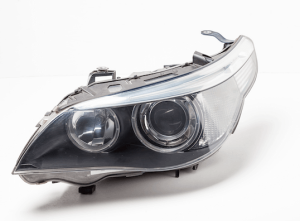
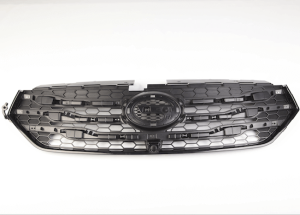
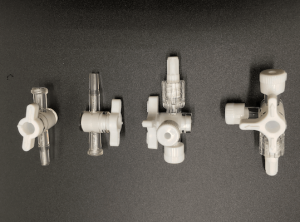
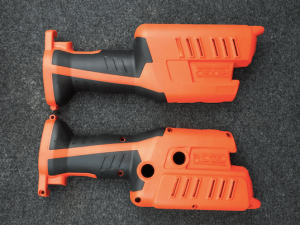
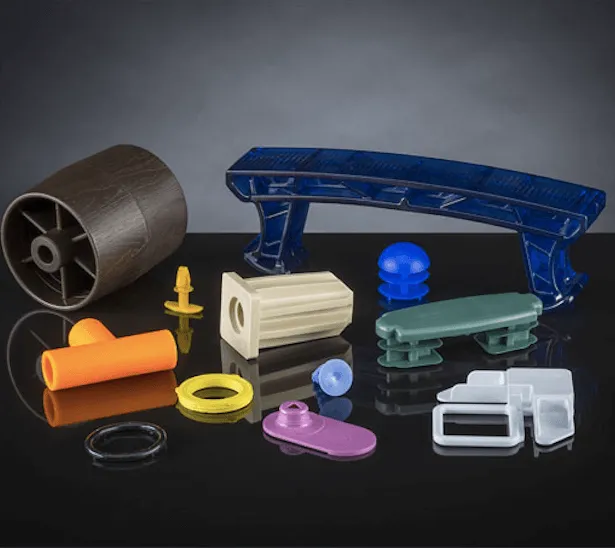
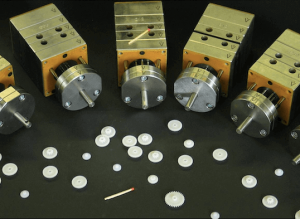
Are still confused whether we can design and produce injection molded parts according to your specifications? Get down to our gallery featuring our sophisticated design and production of various custom plastic parts.

Trusted by Industry Leader Companies

500+ global companies depend on Timely for precision injection molding and custom mold design.

Delphi

Ready to Get Your Custom Mold Design Quotes?

Learn what you need before requesting for quotes for your injection molding projects at Timely. Help you get wonderful injection molding parts made effectively & easily.

Supported File Formats

f1

IGES

f2

IGES

f3

IGES

f4

IGES

XT-file--qxeyh3nrgkleqdb0g2hlsgsn8hvkwuizj41b6nwjvy

IGES

Advanced Tools and Software for Precision Mold Design

s1

CimatronE

s2

SolidWorks

s3

Pro/ENGINEER

s4

AutoCAD

s5

CADKey

Other Services We Provide

In addition to injection mold design services, we also offer the following range of value-added services:

We offer high-precision injection mold making services to ensure mold quality and production efficiency. Whether it’s a single-cavity or multi-cavity mold, we can customize it to meet your requirements, ensuring the mold efficiently supports plastic parts production needs.

Our injection molding services cover the entire process, from small batch trials to large-scale production. We use advanced injection molding equipment and technologies to provide high-quality, consistent plastic parts, optimizing production processes according to your needs.

With our rapid prototyping services, we help you quickly create physical samples during the part design phase. Utilizing advanced 3D printing and other prototyping technologies, we can test and validate product designs in a short time, reducing development cycles and costs.

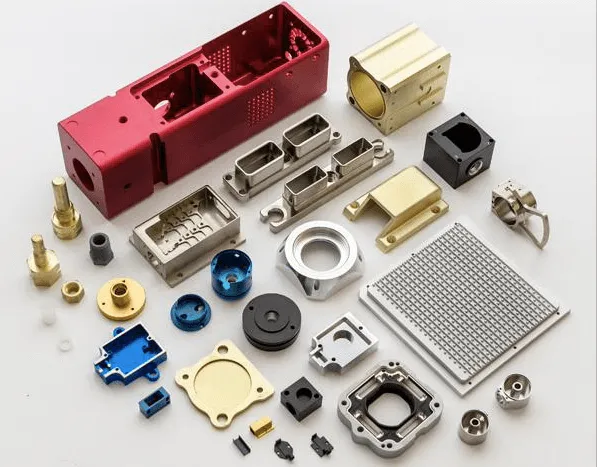
We provide high-precision CNC machining services, capable of machining complex-shaped components. Whether for metal or plastic, we can customize machining based on your needs, ensuring product accuracy and quality.

We use advanced 3D printing technologies to manufacture prototypes or small batch production parts, providing fast and flexible production options. 3D printing enables more complex structures and designs while reducing waste and time costs in the production process.

We provide a variety of secondary processing services, including spraying, electroplating, anodizing, polishing, and more. These processes are designed to enhance the product’s appearance, corrosion resistance, and durability. Customized solutions are available to meet specific customer requirements and ensure optimal quality and functionality.

FAQ's

What does Mold Design mean?

Mold design refers to those who are engaged in the digital design of enterprise molds, including cavity molds and cold stamping dies, based on traditional mold design, and fully apply digital design tools to improve mold design quality and shorten mold design cycles.

Lots of software are suitable for mold design, such as UG, Pro/Engineer, AutoCAD, Cimatron, PowerMill Hypermill, Solidworks, WORKNC, Solid Edge, CATIA, etc.

For simple molds, CAD software is fast and easy to use; for molds with a messy structure and more curved surfaces, Pro-E, UG, Mastercam, Solidworks are good choices. Pro-E or UG is commonly used in drawings and production. Each software has its own characteristics. The important factor for choose is which one the mold designer is better at or prefers to use.

At Timely, our team is proficient in using industry-leading software such as UG (Siemens NX), Pro/Engineer (Creo), AutoCAD, SolidWorks, and Cimatron. These advanced softwares allow us to design molds with complex geometries, intricate details, and smooth surfaces, ensuring high-quality and functional results. By leveraging the strengths of each software, we are able to provide customized solutions tailored to the specific needs of each project.


In the actual design process, according to the requirements of the design content, we need to consider the sequence of 2D drawing(s) or 3D drawing(s). Our mold design steps are listed as below FYR.

1.According to the customized plastic parts 2D and 3D drawings, we will organize the design data, analyze the structure, shape, and assembly dimensions of the plastic product (for example, analyze the rationality of the demolding angle during the molding process), in order to confirm whether the parameters of the injection molding equipment matches the relevant dimensions of the mold, cavity, production batch, steel requirements, etc., and then convert the data into design instructions.

2.We will determine the mold type, overall structure, mold cavity number, and layout of the cavities.

3.The parting surface will be confirmed by using 3D modeling for parting or 2D drawing for post-modeling).

4.We will decide the type of injection system, conduct Moldflow analysis, and confirm the gate form, location, and numbers.

5.To determine side core pulling structure and inclined top mechanism.

6.To confirm the mosaic structure.

7.Design of ejection and early return system.

8.Cooling and heating system design.

9.Guiding and positioning system design.

10.Selection of mold base (size of the template, cavity, core, etc.). Make the assemblies diagram of the mold base, and try to design according to the standard mold base.


1. The overall layout of the mold is reasonable
2. Parting surface selection
3. Layout of 3 runners, selection of glue inlet
4. ejection device
5. water transport arrangement
6. exhaust options
7. Pay attention to the draft angle when parting the mold, the extraction of inserts, the treatment of the rubbing angle, and the selection of material shrinkage
8. Processing drawings should be detailed, but simple.
All in all, mold design must consider the ability to demold! Easy to process and to eject!

Reasonable mold design is mainly reflected in the following four aspects.
1.The quality of the manufactured plastic products (both appearance quality and dimensional stability).
2.Convenient, fast, concise, saving money and manpower during processing and manufacturing, as well as leaving room for mold correction and improvement.
3.Safe, reliable, and easy to maintain the mold during usage.
4.In injection molding, sometimes there is a shorter molding cycle and longer service life, also a reasonable mold manufacturing process.

For mold design, the gate design is usually based on experience, and the size of the gate depends on the cross-sectional area and gate length:
1. The cross-sectional area of the gate is as small as possible, and the length of the channel is as short as possible to ensure the appearance of the finished product and reduce the pressure loss when the plastic passes.
2. The gate must be narrow to facilitate the cold formation and prevent excessive plastic from flowing back, so the gate is in the center of the runner.


For mold design, in order to obtain the best filling condition, the type of gate must be selected carefully. Common gates have the following types: sprue gate, edge gate, overlap gate, fan gate, diaphragm gate, ring gate, film gate, pin-point gate, submarine gate, tab gate, and hook gate, etc.

In-mold design, the side gate is a commonly used type, and its structure is the simplest one. It is only processed on one side of the mold. And this gate connects the runner and the finished product.
Here are several reasons for choosing an edge gate for mold design.
1.The section area is simple and easy to process.
2.The size is easy to accurately control and quickly improve.
3.When plastic is filled, the finished product is easy to control.
4.It is easily affected by the cooling and solidification of the gate and all plastics.

Fan gate is one of the gates types for mold design. And here are some advantages of this gate type for your reference.
1.It is suitable for large-scale and thin-walled plastic injection products.
2.When the resin flows into the mold, the plastic flows from the thinness and expands to form the plastic with good fluidity, reducing the flow pattern and the water trapping pattern.
3.Fan gate is appropriate for any plastic, especially PMMA, except for rigid PVC.

The requirement of the ejector system is to demould the product without deformation and accurately within the specified time. Here are 7 points to be considered for mold design.

1.The ejection stroke generally stipulates that the ejected product is 5~10mm away from the mold. For some simple cylindrical products with a large demolding slope, the stroke can be 2/3 of the product depth. Don’t be too long, because the ejector rod is very thin and has a long stroke, which is easy to damage the ejector rod.

2.The reset rod (return rod) must be set in the ejection system to help the ejector rod return. During the ejection process, the ejector backing plate bears great ejection pressure. When the strength and rigidity are insufficient, the flexible deformation affects the ejector movement. Pay attention to the screw connection (need to be screwed in from the backing plate to the fixed plate) to avoid insufficient wrench space Difficulties.

3.The relationship between the top of the ejector pin and the plane of the core (or cavity) should theoretically be on the same plane, which is convenient for mold manufacturing and assembly. In practice, most of the end surface of the ejector pin exceeds or lowers the core (or cavity) plane by 0.05~0.1mm, Negotiate with the designer to obtain the permission of the inner surface of the product with bosses and pits.

4.The shape and size of the ejector pin. Unless the shape of the product is limited, other ejector pins must be used. Generally, cylindrical ejectors are used, and elongated ejector pins with a diameter less than 3mm should be avoided.

5.Due to the large size of the ejector pin fixing plate and the backing plate, the span between the movable mold backing plate is enlarged. Under higher injection pressure, the movable mold backing plate may be deformed, causing the ejector pin to move poorly or jam In addition to increasing the thickness of the movable mold backing plate to enhance its rigidity, a support column can also be set between the movable mold fixing plate and the backing plate.

6.When the output of the product is large or the ejection stroke is long, use a thinner ejector pin, and when the ejector tube is used for ejection and the movable mold fixing plate is equipped with an elongated core, it is used to protect the ejector pin (or long core). Its movement is stable, the ejection system needs to be equipped with a guiding device, and there are positioning pins between the movable template and the seat cushion bar and the movable mold fixing plate to ensure positioning accuracy.

7.Where the product has plastic surrounding the steel part, it will be difficult to demold. This is caused by the phenomenon of “holding” the steel part due to the shrinkage stress of the plastic melt after cooling. Therefore, these places (ribs, columns) are Should be considered.

In mold design, the injection mold exhaust system is the exhaust of the cavity and the gating system, which mainly includes the air in the cavity, the air in the runner, and the steam of the moisture in the plastic at high temperature. These gases must be discharged in time to avoid affecting the quality of the plastic parts. The exhaust method in the injection mold includes the following 7 ways: ① Parting surface (including venting groove); ② Insert fitting surface; ③ Fitting surface of pushrod or push tube and inner mold insert; ④ Exhaust of side core pulling mechanism; ⑤ Adding a vent needle or insert to exhaust the trapped air; ⑥ Ventilate steel exhaust; ⑦ Exhaust valve.

Let's Start A New Project Today