

Plastic Injection Molding Services

Are you seeking cost-effective injection molding services for producing plastic parts? Get free injection molding quotes and design feedback from experts with our fast online quotation service.

Molding Machine
30 t
Surface Finishes
0
MOQ
0 pc
Tolerances
0 mm

Our Custom Plastic Injection Molding

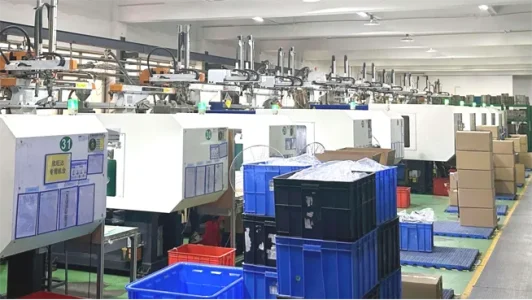
At Timely, we provide one-stop plastic injection molding services, from rapid prototyping to on-demand manufacturing, with fast turnaround times tailored to meet your deadlines. As one of the trusted injection molding companies, whether you require simple standard parts or complex custom components, we provide top-quality injection molded parts with minimal lead time and cost-effective pricing. Our factory is equipped with advanced manufacturing facilities, including high-precision CNC machines and fully automated injection molding machines to produce consistent precision parts from the same mold. To further support your projects, we offer a free consultation service with each order — our experts will guide you on product design, mold design, surface finish selection, and efficient shipping methods.

Injection Molding Process

injection-molding

Plastic Injection Molding

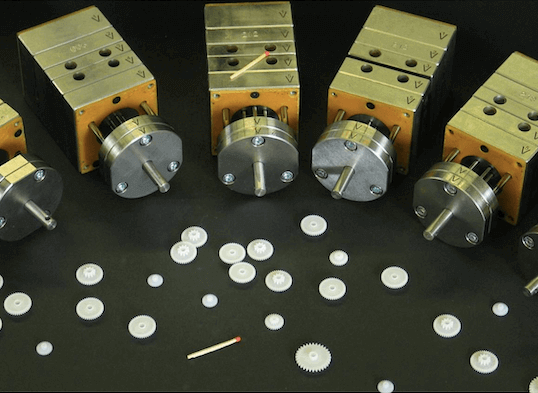
Plastic Injection Molding is the most common injection molding process, primarily involving the injection of molten plastic into a mold to form the desired parts. It is highly efficient in producing precise and complex plastic components.

Applications: automotive parts, medical device components, consumer electronics housings, etc.

2K-injection-molding-1

Overmolding Injection Molding

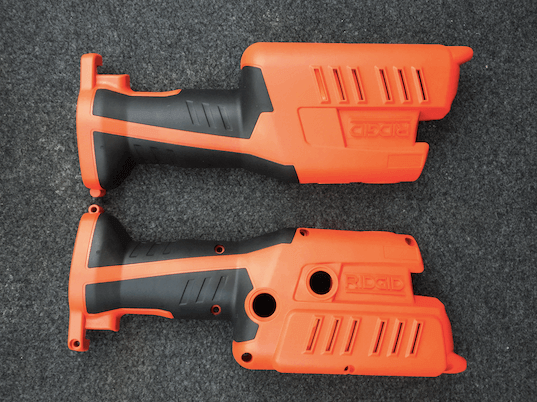
The Overmolding technique involves bonding plastics, metals, and rubber over each other with a resistant and durable chemical bond. We can provide the fastest assembly time.

Applications: automotive handles, medical device grips, smartphone cases, etc.

insert-molding-2-1024x768

Insert Injection Molding

Insert molding involves placing metal parts or other pre-made components into a mold, and then injecting plastic to bond with the insert, creating a unified product.

Applications: Electrical plugs, connectors.

Injection Molding Capabilities

Our injection molding capabilities are built to meet the highest technical standards, ensuring precision and reliability across various industries. We provide detailed technical specifications below to help you quickly assess whether our manufacturing capabilities meet your project requirements

Maximum Part Size

The maximum part size we offer is 1800×1200×500 mm or 70.9×47.3×19.7 in.

Minimum Part Size

The minimum part size we offer is 1×1×1 mm or 0.039×0.039×0.039 in.

Part to Part Repeatability

The part-to-part repeatability we provide is +/- 0.05mm or +/- 0.002 in.

Mold Cavity Tolerances

We manage +/- 0.003 mm or +/- 0.0001 in mold cavity tolerances.

Available Mold Types

We offer premium steel and aluminum molds with the service life of 1000 cycles, 5000 cycles, 30,000 cycles, 300,000 cycles, and over 1000,000 cycles.

Machines Available

Our machines include single-cavity, multi-cavity, and family molds, with press tonnage ranging from 50 to 2800 tons.

Secondary Operations

We offer mold texturing, engraving, post-molding processing, threaded inserts, pad printing, silk printing, painting, chrome plating, ultrasonic welding, hot transfer printing, water transfer printing, and primary assembly for secondary operations.

Inspection and Certification Options

Our inspection and certification include First Article Inspection, ISO 13485, ISO 9001, and IATF 16949.

How to Work with Us?

From quotation to final production, acknowledge the seamless order process at Timely. Our qualified team ensures you get your plastic molded parts within the provided lead times.

Request Instant Quote

You can request an instant quote from our quotation form. Our expert team will reach out to you within 24 hours to provide consultation throughout the process.

DFM Report

To execute the project feasibly, we provide a DFM report to review your design and identify any flaws and errors before starting the production process.

Mold Design & MoldFlow

The predictive model process analyzes molten material behavior within the mold. The advanced mold flow analysis ensures high-quality and precise molded parts.

Mold Tooling Production

We use preferred material for mold tooling production to provide premium-quality and tailored mold tooling that perfectly fits your application’s specifications.

T1 Sample Inspection

We deliver T1 sampling for inspection and review before mass production. The process ensures error identification and precise manufacturing of the plastic part.

Low Volume Production

After the trial phase, we provide low-volume production service to ensure precision with efficient machinery under expert surveillance, saving time and cost.

Strict Inspection

At Timely, we follow international tolerance standards and rigorous quality control inspection to meet the highest excellence and fulfill your provided specifications.

Delivery

Our team securely packages your plastic molded parts before dispatching them to avoid damage. We have partnered with logistics to schedule timely delivery at your place.
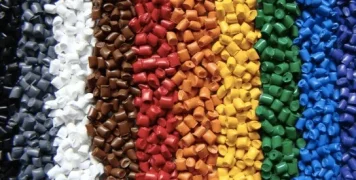
Injection Molding Materials

We offer a wide range of materials for your selection to ensure the best quality and performance of products. We can source thousands of materials based on your specific needs. We provide accurate machining quotes for over 50 plastics.

Plastic-Materials-1

Plastic Materials

With an extended range of plastic materials, you can choose what fits your needs perfectly. Each material has qualities that include heat resistance, impact strength, wear resistance, and many more.

  • Impact resistant: ABS, PMMA, PVC, PE, PC
  • Wear-resistant: POM, PEEK, UHMW
  • Dimensional stability: PBT, ABS, HIPS, PPS
  • Chemical resistance: PEEK, PP, PBT, PA, PE, LDPE
  • Rubber like: TPU, TPE, Silicone
  • Cost-efficient: PP, HDPE, LDPE
  • Cosmetic: ABS, PC, HIPS

Additives-and-Fibers

Additives and Fibers

We incorporate additives and fibers to enhance the quality and esthetics of standard plastic materials. The process increases the functionality and performance of the molded product.

  • UV absorbers
  • Colorants
  • Glass fibers
  • Flame retardants
  • Plasticizers

C.-Composite-Materials

Composite Materials

We utilize composite materials to enhance the overall performance of products, combining different materials to improve strength, heat resistance, and weight optimization. These materials are essential for high-performance and innovative applications.

  • Glass Fiber Reinforced Plastics (GF-PP, GF-PA, etc.)
  • Carbon Fiber Reinforced Plastics

Contact us for expert advice and guidance to help you choose the ideal material for your project.

Surface Finishes of Injection Molding

The process includes various steps, from injection mold tooling to full plastic injection molding. Surface finishes of molds are processes typically carried out during production. At our company, we perform the specific surface treatment after the injection molding process according to customer requirements, ensuring that end use production parts meet the desired aesthetic and performance standards.

Glossy

Glossy

The SPI grade A1, A2, and A3 surface finishes are made with diamond buffing for a glossy and shiny surface finish.

Semi-glossy

Semi-glossy

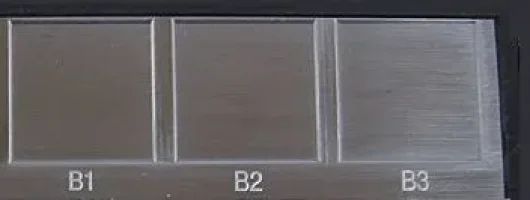
The SPI standard B1, B2, and B3 grade surface treatment uses grit sandpaper paper to yield a semi-glossy surface finish.

Matte

Matte

The C1, C2, and C3 SPI grade surface treatments use grit sanding stones to achieve rough texture and uneven surface.

textured

Textured

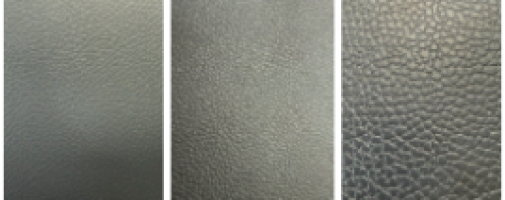
D1, D2, and D3 grade treatments use dry blast glass beads, and oxides for the surface finish to produce a very coarse and textured surface.

Custom Injection Moldings Design Guidelines

Design Consideration

Description

Considerations

Material Selection

Choose materials compatible with the injection molding process to ensure the desired performance of the final product.

Different plastics have varying properties, such as flexibility, strength, and heat resistance. Choose the right material based on the application needs.

Wall Thickness Design

Maintain uniform wall thickness to prevent warping, uneven cooling, or defects in the final product.

Recommended wall thickness range is 1-4 mm. Consistent thickness ensures stability during molding and higher part quality.

Draft Angle Design

Include appropriate draft angles in the mold design to facilitate smooth part ejection.

Typically, draft angles of 1-3 degrees are used to ensure easy part ejection and reduce mold and part damage.

Radii and Fillet Design

Use radii or fillets to avoid stress concentration and enhance the part’s strength and durability.

Sharp corners increase stress concentration, raising the risk of breakage. Rounded corners improve part strength and extend product lifespan.

Mold Design

Mold design must consider part ejection, cooling efficiency, and complexity. Simplified designs help reduce costs.

The complexity of the mold affects costs. A simplified design is often more cost-effective, while complex parts may require more intricate molds.

Tolerance and Fit

Define part tolerance requirements to ensure accurate fit and function.

Tight tolerances increase production costs. Balance functional needs with cost-effective tolerances.

Gate and Runner Design

Properly design gates and runners to ensure uniform filling of the mold, avoiding defects and material waste.

Gate position and size are crucial to prevent air bubbles, voids, or incomplete filling.

Post-Processing Needs

Consider post-processing steps, such as painting, plating, or assembly, to ensure the design meets final product needs.

Plan for post-processing during the design phase to avoid delays or issues during subsequent manufacturing steps.

Prototype Testing

Conduct prototype testing to validate the design for functionality, appearance, and tolerance requirements before full production.

Prototype testing helps identify potential issues early, preventing costly rework during large-scale production.

Gallery of Injection Molded Plastic Parts

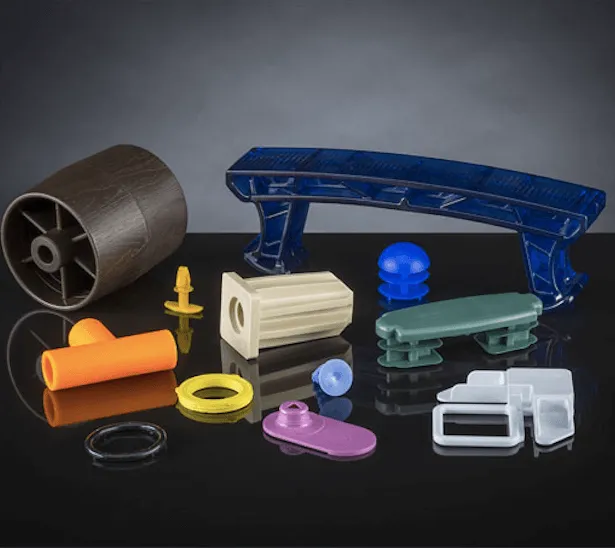
Still unsure whether we can design and produce custom molded plastic parts according to your specifications? Check out our gallery showcasing the sophisticated design and production of various injection molded plastic parts.

Why Choose Timely for Custom Injection Molding Services

No MOQ

With our no MOQ policy, increase the production efficiency of your plastic molded parts. We offer accelerated production and on-demand injection molding services while ensuring low injection molding costs.

High Efficiency

Timely features a systematic supply chain and certified domestic factories. We make sure to swiftly bridge the gap between product development and product manufacturing promptly with the fastest delivery.

Consistency and High Quality

At our factories, we conduct an automated dimensional inspection after the production phase to ensure the consistency of custom-molded products regardless of design complexity.

Injection Molding Specialists

Our product developers and engineers have 20+ years of experience in the industry. Under expert surveillance, we ensure your product prototyping and production turnaround are error-free.  

Strong Manufacturing Capacity

We provide robust manufacturing capacity in our domestic factories in China, offering quality injection molding project solutions with diverse options for surface finishes and flexible materials. We fulfill low-volume and high-volume production demands.

Fast Online Quotation

We offer warranty and post-sale service on injection molded products. Our warranty and after-sales service cover defects and repairs/replacements of molded products. We offer 24/7 customer support in case of issues.

How Do We Ensure Every Part Meets Your Specifications?

At Timely, we have extremely strict quality standards for our products. Our quality inspection process spans the entire production cycle, ensuring that every plastic part meets international quality standards.

Raw Material Inspection

Whether it is thermoplastics, thermosets, or engineering plastics, we perform comprehensive quality tests to ensure the reliability of the materials.

Quality Control During Production

During production, we implement real-time quality monitoring, utilizing high-precision equipment and a professional technical team to analyze data and detect potential issues. This ensures that every stage of production is error-free.

Injection Molding Process Quality Inspection

We strictly control important parameters such as pressure, temperature, and speed during the injection molding process to avoid any non-compliance with standards.

Final Product Quality Inspection

Every injection-molded product undergoes comprehensive quality checks, including but not limited to dimensional accuracy, appearance defects, and functionality tests.

Trusted by Industry Leader Companies

500+ global companies depend on Timely for precision injection molding and custom mold design.

Delphi

Ready to Get Your Custom Injection Molding Quotes?

Learn what you need before requesting for quotes for your injection molding projects at Timely. Help you get wonderful molded parts made effectively, easily.

Learn about how our quoting algorithm works

FAQ's

What is injection molding?

Injection molding is a unique process of manufacturing products by injecting molten plastic resins in the mold cavity to produce desired products. This process is widely used in the plastic product manufacturing industry for the high-volume production of complex parts with precision. It offers high repeatability, efficiency, and low cost throughout the process.

With the injection molding process, you can typically manufacture products with complex geometrics and tight tolerance consistently. It is consistent with a diverse range of resin materials and colors, offering flexible and fast production.

However, it demands careful operating and handling, such as temperature and pressure setting of molten material, to ensure premium quality and reliability of final products.

If you are new to injection molding, you can learn more about the process through our detailed guide.


Since it is a versatile and advantageous process for many applications, several high-grade industries use it to produce high-quality and durable molded products.

Some of the common industries that leverage injection molding are as follows:

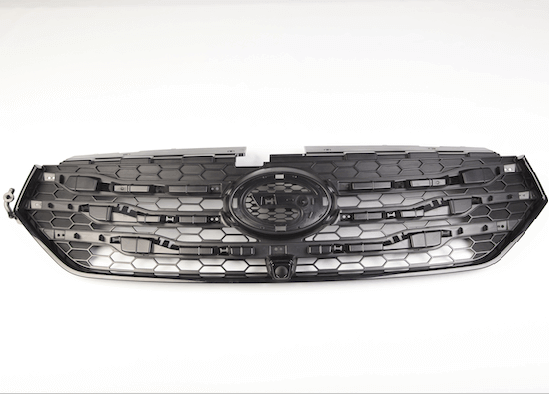
Automotive Industry:Injection molding is the ideal option for the automotive industry as it offers precision for highly-complex parts. The automotive industry uses injection molding to craft specific car parts such as bumpers, grills, dashboards, car panels, and door handles.

Aerospace Industry:It is another common industry that widely utilizes the injection molding for precise parts manufacturing. The process is used explicitly for making lightweight and functional parts. It manufactures aircraft parts, like enclosures, winglets, structural components, turbine housing, and panels.

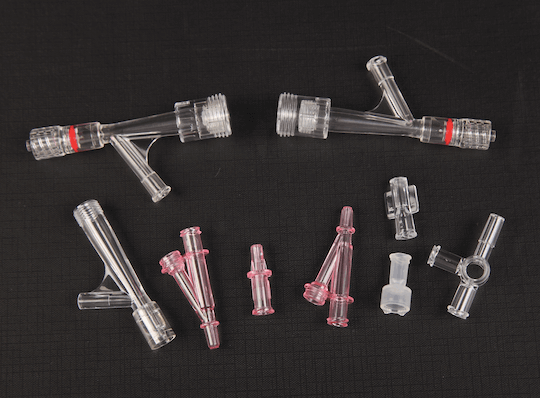
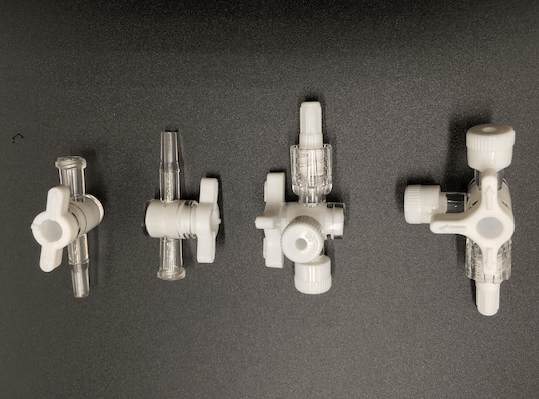
Medical Industry:Medical industry demands accurate manufacturing of small and high-grade sensitive parts. From complex medical devices to small equipment such as syringes, drip valves, and containers are constantly made with injection molding process for enhanced durability and sensitivity of medical products.

Consumer Product Industry:The injection molding method for manufacturing plastic products is also common in the consumer product industry. It is used for manufacturing kitchen gadgets, toys, household device enclosures, and musical instruments. The process is compatible with thermoplastics and thermoset material; thus, a cost-effective option for the consumer product industry.


It is a process used for manufacturing plastic products. We heat the plastic material to change it into molten and then pour it around the mold. Molten plastic then solidifies and transforms into the required plastic product. It is quite a convenient method for making complex plastic parts that demand high precision and detailing.  

Injection molding is commonly used for mass production as it is a cost-efficient and relatively faster process than other plastic molding methods. Once the mold is set up, it can be reused up to millions of times to produce identical parts with consistency.

It has been widely used in industries aiming to achieve high repeatability and accurate plastic products.


At Timely, we follow the 6 fundamental steps for injection mold making:

  1. Requirements Analysis Planning

In the first step, we understand the client’s requirements and design the blueprints accordingly. We analyze the requirements, such as mold design, material to use, production capacity, and resources, to plan the entire production process.

  1. DFM Report Analysis

We provide free detailed DFM reports enabling clients to understand mold design feasibility in the production phase. Design for manufacturability report allows the clients to determine if the final product meets their requirements.

  1. Mold Production

After the approval of the DFM report, the next step is mold production. Initially, during mold production, a Tooling Schedule form is provided to them for monitoring the production cycle at any time.

  1. Free Sample Testing

The fourth step is the testing phase, where we provide free sample testing to the clients with a detailed report of the production phase. The testing phase allows us to cater to any issues we encounter during production at an early stage.

  1. Mass Production

After a successful testing phase and satisfactory client remarks, we began the mass production of plastic molded products. Our expert teams inspect the process comprehensively to ensure the standard quality of products.

  1. Inspection and Mold Saving

We conduct a thorough inspection of produced parts to make sure every part is error-free and perfectly functional. For future production, we clean and preserve the molds in a safe environment.


One thing that is closely considered during the injection molding process is tolerance. However, there is no standard tolerance range specified for molded products. It entirely depends on the mold design, geometric complexity, and part size. Here is a typical tolerance range of common molded parts;

Parts Types

Tolerance (Inches)

Simple Injection Molded Parts

+/- 0.002 to 0.005

Geometrically Complex Parts

+/- 0.001 to 0.003

Large molded parts

+/- 0.005 to 0.010


There is no MOQ at Timely. Whether you need a single part or mass production, we accommodate customers on all order quantities. However, pricing may vary on order quantity. It will be cost-effective in case of bulk orders.


The injection molding process cycle depends on the product’s size, design complexity, and specifications. Manufacturing molded parts in advanced injection molding machinery typically take a few seconds to two minutes. However, complex parts take demand longer cycle time than simple parts. Moreover, the required manufacturing time also depends on the complexity of the finishing and assembling process.


The cost of injection molding services is influenced by multiple factors, including materials, mold complexity, production volume, and more. Therefore, it is not possible to provide a fixed price based on a single parameter. Below are some key factors:

  1. Mold Cost: The primary cost in injection molding is typically the design and manufacturing of the mold. Complex molds or those with precise requirements may require more time for design and processing, thus increasing the mold cost. Generally, mold costs are a one-time investment but can be spread over a large production volume to lower the per-unit cost.
  2. Part Complexity: The complexity of the product design directly impacts the difficulty of the mold and production cycle. Parts with intricate geometries, fine details, and strict tolerance requirements typically result in higher processing costs.
  3. Production Volume: Injection molding benefits from economies of scale. When producing in large volumes, the cost per part significantly decreases because the mold and equipment setup costs are spread over more units. Small batch production, on the other hand, has higher unit costs due to the higher setup and mold costs.
  4. Material Type: Different plastic materials have vastly different costs. For example, common plastics like polyethylene (PE) and polypropylene (PP) are more affordable, while high-performance materials such as POM, PEEK, or TPU are more expensive, especially when custom formulations are required.
  5. Production Cycle and Efficiency: The production cycle time also affects the overall cost. Parts with longer production cycles result in higher equipment and mold usage time, which increases manufacturing costs. Efficient production equipment and optimized processes can reduce cycle times, improve overall efficiency, and lower costs.
  6. Post-processing Requirements: If the parts require additional post-processing, such as surface treatments (e.g., painting, electroplating), assembly, or packaging, these additional steps will increase costs.

To receive an accurate quote, you typically need to provide the following detailed information:

  • CAD drawings or 3D models of the part
  • Material specifications
  • Expected production quantity
  • Tolerance and surface finish requirements
  • Required post-processing steps

Based on this information, we can provide a more precise quote. For small to medium batch production, costs typically range from a few thousand to tens of thousands of dollars. For large-scale production, the total cost may be higher, but the cost per unit typically decreases.

If you have specific project requirements, please contact us directly to get a detailed quote and our injection molding service plan.

For more detailed insights, explore our expert’s comprehensive guide on injection molding costs in the blog post.


There are several types of processes that injection molding solution companies use for a wide range of applications. Here are some common types of injection molding processes;

  • Plastic Injection Molding (Cold-shot & Hot-shot)
  • Metal Injection Molding
  • Overmolding
  • Die-Casting Molding
  • Insert Molding
  • Gas-assisted Molding
  • Micro Injection Molding
  • Multi-Shot Injection Molding
 

An injection mold lasts hundreds of cycles to millions without repair and replacement. It mainly depends on the maintenance, cleanliness, SPI rating, and quality of the mold. If the mold is cleaned and stored under favorable conditions, its lifespan will be extended.

At Timely, we follow a rigorous process for cleaning and preserving molds to ensure longevity and reusability. We store molds under ambient conditions for future production cycles.

To learn more information about your mold lifespan, check out our detailed guide on injection mold lifespan in our article.


Plastic injection molding service is achievable in a suitable manufacturing facility with advanced machinery and expert designers. Injection molding partners in China like Timely are known for fast production and precision molded parts.

With our own factory, we provide complete injection molding services from mold manufacturing to mass production in one place. For free quotes and rapid prototyping, contact us.


Let's Start A New Project Today