
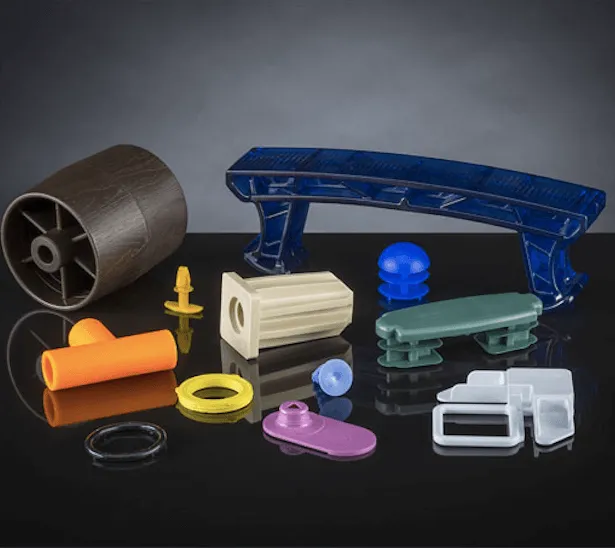

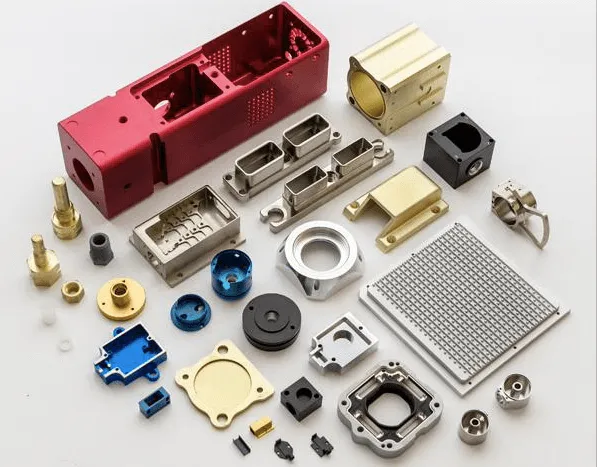


At the center of injection molding, is a component named the “injection mold base”. It often goes unnoticed but it’s essential to the entire process. Aside from being a simple container for the mold, h shaped mold base, is an intricate structure that underpins, aligns, and hastens the molding operation.
The role of injection mold base is really paramount in the fabrication of plastic products. It oversees the accuracy of aligning the molds, impacts the caliber of the end product, and bears on the productivity of the manufacturing cycle.
In this article we’ll explore everything you need to know about injection molding bases.
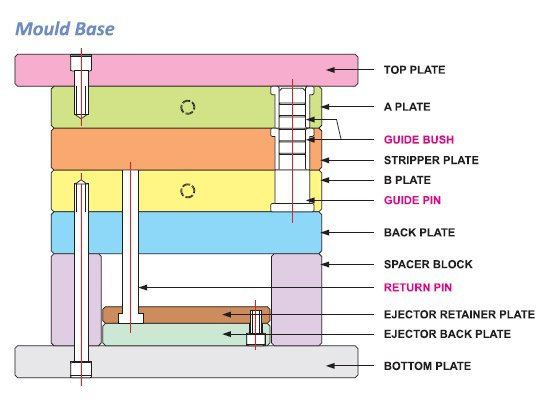
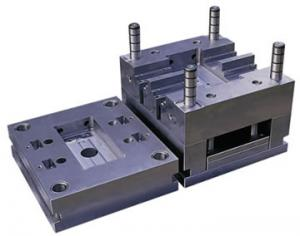
A mold base is like the framework of a mold used in plastic injection molding. The mold base provides the anatomy that holds all the parts together. The main components of the mold base include bushings, plates and pins.
Plates, like the A and B plates as shown in the diagram above, are the major sections of the mold base. They securely hold the cavity and core inserts.
Nevertheless, pins and bushings are like joints and connectors of the mold base. They aid in aligning the plates and direct the movement of the mold components during the molding process.
The mold base ensures accurate shape of the plastic parts by supporting the cavities and cores in the right position. It can be compared to the foundation of a house, providing stability and the structure for the modeling process.
Mold bases come in different types including A- series, B-series, Xpress, T-seriesAX-series and X-series that have a crucial role in forming the structural framework necessary for producing plastic parts.
The A-series mold consists of two main plates, A and B plates, with inserts for cavities and cores. This type of mold base is a standard configuration used in various industries.
This series is adaptable to different configurations to accommodate specific molding needs in industries like automotive, consumer goods and electronics its versatility makes it preferred for many molding projects, from small scale to large scale productions.
The B-series mold is made up of a 5-plate design, which has cavity and core plates machined directly into the base. This eases the mold making process, thus reducing the need for extra components and assembly time.
Economic wise, B-series bases are cost effective as they simplify the mold structure and minimize machining requirements. They are mostly applied in projects requiring efficiency and saving costs, such as high-volume production run for items like disposable packaging or medical devices.
DME XPress mold bases are used for urgent or straightforward molding projects since they are designed for rapid delivery and setup. These bases usually come stocked and pre-machined, greatly reducing the setup times compared to custom mold bases.
The benefits of these bases are the speed and convenience they offer allowing manufacturers to quickly initiate production with delayed times. They are ideal for projects with fixed deadlines or those requiring immediate production start-up.
This type of mold base is designed for top runner molds that require floating plates. This design enables seamless ejection and release of parts enhancing production. It showcases features like automatic degating, efficient runner and part separation.
T-series bases are highly preferred in industries where precision in part ejection and runner separation are crucial such as medical device manufacturing.
The AX-series is ada[ted from the A-series, particularly designed for projects with complex prerequisites at the core. It integrates features specialized to accommodate intricate molding procedures, including core pull mechanisms for developing undercuts or complex geometries.
Its benefits are apparent in its ability to cater for challenging mold setups where inch-perfect movement is vital for production of ornate parts with high accuracy.
The X-series mold base, specifically stripper series, characterizes floater plates mapped out for industries producing round parts like caps or containers. These bases simplify efficient ejection of cylindrical parts by incorporating specialized stripping mechanisms.
Its capability to handle round parts geometries makes production simpler, thus it’s often a preferred choice for industries in need of high volumes of cylindrical components such as bottling, automotive sectors etc.
All these mold bases present distinct features and configurations attuned to specific molding and industry requirements. Selecting the appropriate mold base is essential for optimal performance whether it’s for rapid prototyping, specialized molding projects or standard production runs.
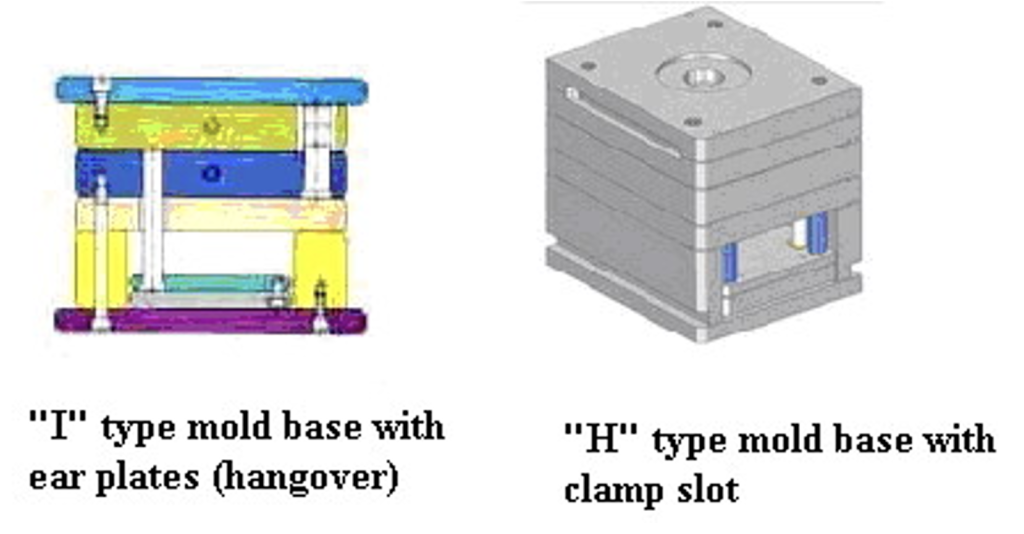
Typically, mold bases are built using different types of steel, each with its own characteristics and merits. Commonly used steels are No. 1 , No. 3 and No. 7. Let’s discuss each of these !
No. 1 steel, famously known as P-20 steel, is a champion for mold bases because of its meticulous polishing and machinability. It’s adaptable and thus preferred for molding applications ranging from simple to complex.
P-20 steel is known for its calculated dimensions and surface finishes ensuring constant quality of parts over numerous molding cycles.
No. 3 steel is known as S-7 steel, it is famous for its impact resistance and rigidness, making it ideal for molds subjected to heavy operations. Its robust nature allows it to overcome harsh operating conditions and frequent tooling conversions without compromising performance.
This steel is suitable for molds keen to detail in development or molding materials with abrasive properties.
No. 7 steel, commonly known as H-13 steel, is usually a preferred choice because of its unrivaled heat resistance, thus an excellent choice for high-temperature molding. Its ability to withstand exposure to increased temperatures for long without deformations or loss of mechanical properties is vital for injection molding of thermoplastics.
It ensures performance reliability and endurance in demanding molding applications requiring paramount thermal stability.
Selection of materials is crucial for durability and precision in molding operations. The chosen steel must not be susceptible to harsh conditions like high pressure or abrasive wear etc.
Selecting the right mold base is essential as it influences both the quality of the final part and the efficiency in production. We will discuss a few factors to consider when selecting mold bases.
When picking a type of mold base, contemplate on the complexity of the design. Simple part geometries with lesser features, standard A-series mold base is applicable, offering adaptability and cost-effectiveness.
Production volume is also an important aspect in mold base selection. For low to moderate production volumes, it is advisable to use standard A-series or B-series as they are flexible and cost-effective,
Considering specific molding requirements like part size, material type and dimensional tolerances is also important when selecting a mold base. A robust steel like No 3 is preferred for molds producing parts from abrasive materials or tight dimensional tolerances. No 7 may be necessary as it is immune to wear and maintains accuracy over time.
For molds with features like guided ejection or vented leader pins to improve part quality, it is advisable to select a mold base in-built with these features.
The size and plate thickness of the mold base selected, should match the dimensions of the part and the molding machine’s potential. For larger parts, a mold base with thicker plates may be used to provide enough support and prevent warping during the molding process.
When selecting a mold base, it is essential to consider special features like guided ejection, vented leader pins or cooling channels since they can significantly impact the part quality and mold performance. This in turn improves the machine’s operational efficiency.
To ensure performance endurance and long-term reliability of mold bases in injection molding operations, proper maintenance should be done. Do the following to maintain your mold base properly:
These maintenance tips help ensure long-term reliability and performance of mold bases, minimizing downtime and optimizing production efficiency
Recent innovations and developments in mold base design aims to enhance flexibility, durability, efficiency and accuracy in injection molding processes. Such advancements include:
Modular setups are designed to enable interchangeable components for enhanced flexibility and efficiency. These setups smoothen production processes allowing quicker mold changes and minimizing downtime between runs.
The development of new steel alloys has improved properties such as durability, heat resistance, and machinability. Innovation and advancements in material technology contribute to longer mold life and better performance that meets the demands of high-volume production environments.
Smart technologies like sensors and actuators, when integrated with injection molding processes, allow for real-time monitoring and control. These technologies collect valuable data on mold base performance, enabling proactive maintenance optimizing production processes for enhanced efficiency and quality.
Additive manufacturing has revolutionized mold base designing since it has allowed creativity in complex designs and customization reducing leading lead times. This innovation opens up an avenue of new possibilities for intricate mold geometries and optimized cooling channels thus improving the quality of parts and efficiency during production.
It is evident that these components are by far more just structural make ups. In fact they are really important to the entire process, as they play a significant role in ensuring the efficiency, quality and success of plastic product manufacturing.
The injection mold base can be said to be the pillar of the plastic injection molding process. Its design, functionality and material composition have an enormous impact on the general success of plastic product manufacturing.
A carefully selected and expertly designed mold base can lead to remarkable improvements in product quality and manufacturing efficiency, displaying their major role in the vast world of plastic injection molding.